|
With Parson Altalk’s failure to address his parishioners’ earthly needs, such as overcoming superstition and dealing with the conjurors, Treemonisha’s neighbors need a leader, someone capable of guiding them forward. Long before introducing his failed leader, Joplin had set the scene for his true leader’s arrival. In the opera’s preface, he explained that whites had left the plantation after the Civil War, leaving it to be run by Ned, a trustworthy servant. Living in dense ignorance, symbolized by the dense forest surrounding the plantation, the freedmen were left “with no one to guide them as they struggled to adapt to unaccustomed freedom. Childless Ned and Monisha prayed for an infant who could grow up educated and able to “teach the people around them to aspire to something better and higher than superstition and conjuring.”
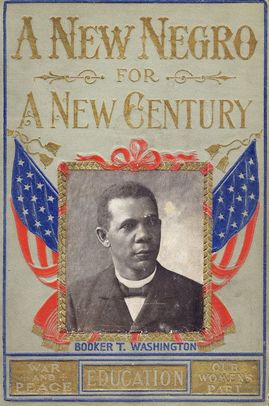
In the opera’s opening number, Treemonisha reprimands the conjuror Zodzetrick for having “caused superstition and many sad tears,” and viewers and listeners recognize her potential to realize Ned and Monisha’s dream. Indeed, before the opera’s opening, Treemonisha had achieved small scale teaching success. She had taught Remus to read, enabling him to chide Zodzetrick, not only by arguing that the conjuror cannot fool the level-headed Treemonisha, but that he can no longer fool Remus: To read and write she has taught me, and I am very grateful, Although education might initially come from whites, Joplin shows that a black with basic education could become the educator, as did Booker T. Washington and so many graduates of schools such as Hampton and Tuskegee. Speaking of Tuskegee, Samuel Chapman Armstrong had once written, "It is a proof that the Negro can raise the Negro" (Qtd. by Washington in The Story of My Live and Work, J. L. Nichols & Co., 1901, 372). Washington attributed much of this success to his people's desire to learn from their teachers as he had learned from Armstrong: "Often hungry and in rags, making sacrifices of which you little dream, the Negro youth has been determined to annihilate his mental darkness. With all the disadvantages the Negro, according to official records, has blotted out 55.5 per cent of his illiteracy since he became a free man" ("Negro Education Not a Failure," Booker T. Washington Papers. Univ. if IL Press, 1972, II: 431). Somewhat like Treemonisha, Washington received much of his education from white teachers. Similarly, Scott Joplin’s mother is said to have received permission for Scott to play the piano in the home of her white employers, and a white music teacher, German immigrant Julius Weiss, later provided lessons (For a more detailed discussion, see Ed Berlin's King of Ragtime, 2nd ed., NY: Oxford, 4-5). While Hampton, a white-run school, and Tuskegee, a black-run school, both trained young blacks to go into primarily rural black communities to spread literacy, eradicate superstition, and serve as moral examples, Scott Joplin used his own talent to dramatize and set to music the development of a young black leader destined to perform the same roles as Hampton and Tuskegee graduates. Although Treemonisha admonishes Zodzetrick in the opening scene, perhaps hinting that she knew the role her parents Ned and Monisha dreamed of her fulfilling, at heart she is still a child. We see her eagerly preparing for harvest festivities, wanting to pick leaves to make a head garland like those the other girls are wearing. Yet Joplin uses this scene to distinguish her from the other girls as, for the first time, Monisha reveals the story of her foundling daughter’s mysterious appearance under “a sacred tree” (See blog post “Treemonisha and the Sacred Tree,” 9/16/2017). Treemonisha may want to be like the other girls, but her magical origin hints that she was predestined to become the much needed teacher and spiritual guide. Not fully ready for her role, despite her verbal attack on Zodzetrick, this future leader must first face hardship like so many mythological and folkloric future leaders before her. Instead of coming out the victor, however, she emerges from the experience with a changed attitude toward the adversaries intent upon doing her harm. Having been kidnapped by the conjurors and nearly subjected to “the awful sting of the wasp,” she is rescued by Remus, disguised as a fearsome scarecrow (“Wasps and Wasp Nests in Treemonisha,” 9/27/2017; “The Scarecrow in Treemonisha,” 10/3/2017) . Treemonisha is put to a moral test as her neighbors, seeking to avenge her kidnapping, advance with raised fists and voice their intent to punch and kick the conjurors. In contrast, she demonstrates her deep sense of humanity by ordering them to stop: You will do evil for evil, After Treemonisha repeats her command to free the conjurors, Remus sings "Wrong Is Never Right," thus reinforcing her message: Never treat your neighbors wrong, After hearing Treemonisha and Remus, the octet chorus of neighbors concurs: Wrong is never right Not everyone is yet ready to follow Treemonisha's moral instruction. Still unconvinced, Andy argues: We should beat these men, As Treemonisha persists, "Do not abuse them, they will be good," Ned argues for retaliation: When villains ramble far and near, Only when Treemonisha entreats her adoptive father and neighbors to forgive the conjurors "for her sake," do they consent to follow her wishes. Ever Treemonisha’s devoted follower, Remus shakes hands with the conjurors and forgives them, gently urging, "Always be kind and true./Be careful what you do."
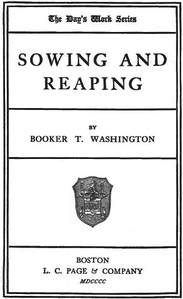
Of all our work, that upon the heart is the most important; there can be no question as to the paramount necessity of teaching the vital precepts of the Christian faith, and of striving to awaken a genuine enthusiasm for the higher life. (Education for Life: The story of Hampton Institute, Garden City: Doubleday, Page & Co., 1922, 120) Instead of criticizing others, Washington advised his students to “encourage them in order that they may improve.” “If there is any good in a person,” he continued, “let us seek to find it; the evil will take care of itself” (Sowing and Reaping, Boston: L.C. Page & Co., 1900 ). Treemonisha shares these beliefs. She risks angering her father and neighbors, much as she earlier angered Zodzetrick when she reprimanded him. If she wants to make a difference in her community, she has no option. Rather than fault-finding and condemnation, however, a leader needed to teach ways to improve. As Samuel Chapman Armstrong wrote in The Southern Workman, “You cannot be the friends your people need, unless you are brave enough to tell them their faults, and work, not for their thanks, but for their good” ("Letter and Editorial Reply," The Southern Workman 7:5, May 1878, 35). More than two decades later, the same message was still being voiced at Hampton: The primary need of the Negro to-day is unselfish and competent leaders who will fearlessly and faithfully point out evil and errors and clearly indicate proper lines of action; men who will not constantly think of their own success and popularity, but will take pride in upholding the self-respect of the race. . . The race needs encouragement and stimulus, but neither flattery, nor misrepresentation. (G.N. Grisham, “The Aim of Negro Education,” The Hampton Negro Conference, Number IV, July 1900, 83) Despite standing her ground, Treemonisha reveals she has not fully accepted the responsibility of leadership; for she, too, is looking for a leader: We ought to have a leader Ready to improve their lives, a chorus of her neighbors proclaims: We want you as our leader,
Perhaps the most encouraging thing in connection with the lifting up of the Negro in this Treemonisha holds back, fearing that even if the women would follow her, the men would not. She repeats, “There’s need of some good leader.” Only when all her neighbors, male and female, insist they will trust her as their leader does she comply: I will lead you;
“Let us make the teachers and we will make the people,” Hampton boldly declared (The Hampton Normal and Agricultural Institute, a four-page booklet, 1889, 3). Focusing more on how the teacher will serve as role model or “object lesson” than on the school's role in that process, Washington affirmed, “In every way there will be an opportunity for that person to revolutionize the community” (Character Building, New York: Doubleday, Page & Co., 1903, 196). With Treemonisha finally accepting her leadership role, Joplin’s heroine is poised to become “a center of influence and light in showing the masses of [her] people in the Black belt of the South how to lift themselves up”—a leader who can help, unlike Parson Alltalk, make their religion “less [a matter] of superstition and emotion and more a matter of daily living” (The Future of the American Negro, 115-116; The Story of My Live and Work, 262) . When the masses "catch something of the Christlike spirit" from such a leader, Washington wrote in Sowing and Reaping, "we an have a heaven, as it were, on earth" (23).
Comments are closed.
|
AuthorI am a retired community college professor and the great-granddaughter of composer, orchestrator, arranger, organist, and teacher William Christopher O'Hare. Click the "Read More" link to see each full blog entry.
Archives
November 2020
Categories
All
|
 RSS Feed